

Wall art reflects personality because it functions as a visual autobiography, translating your inner values, emotions, and lived experiences into the images you choose to live with every day. This is not decoration for decoration’s sake. Environmental psychology describes the practice of shaping your home as environmental profiling, a process where every piece you hang communicates something true about who you are. The art on your walls speaks before you do. Understanding that connection helps you choose pieces with intention, and build a space that genuinely feels like yours.
Why wall art reflects personality through emotion and experience
The images you are drawn to rarely arrive by accident. They carry the weight of where you have been, what you have felt, and what you quietly hope for. 68% of artists say their personal artworks directly reflect their lived experiences. That same instinct lives in every person who pauses in front of a print and feels something shift.
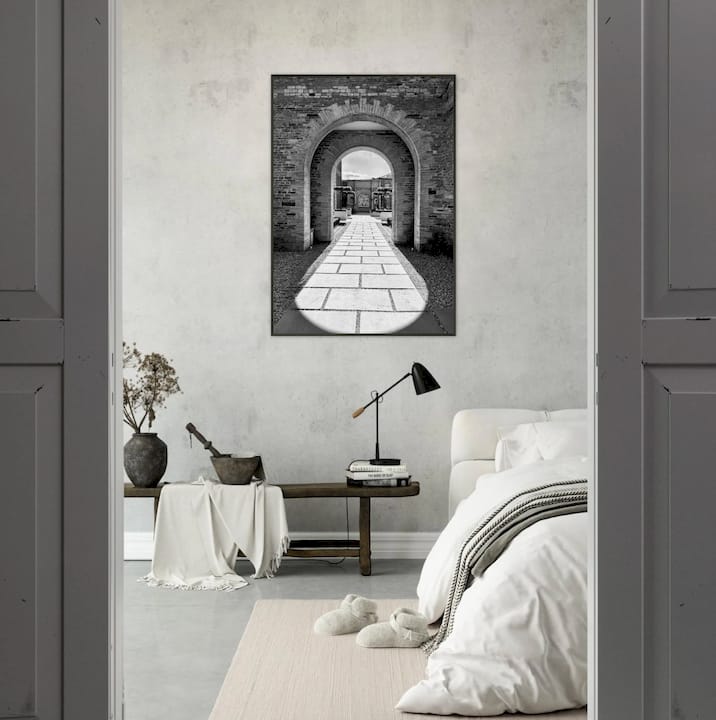
Your emotional history shapes every choice, from color to subject matter to scale. Someone who craves calm after a long week gravitates toward soft coastal landscapes and muted tones. Someone who runs on creative energy reaches for bold abstracts with saturated color. Neither choice is random. Both are honest.
Here is how personal experience typically shapes art selection:
-
Mood and atmosphere: You choose imagery that mirrors how you want to feel at home, not just how you currently feel.
-
Color resonance: Color psychology shows that warm tones signal energy and warmth, while cool blues and greens evoke stillness and clarity.
-
Subject matter: Travel scenes, cityscapes, and natural landscapes each carry specific emotional memories that make a space feel personal and grounded.
-
Scale and placement: Large statement pieces signal confidence. Quiet, smaller works arranged thoughtfully suggest a more reflective, layered personality.
Pro Tip: Before buying any piece, ask yourself: “Does this remind me of a feeling I want more of?” If the answer is yes, it belongs on your wall.
What psychology says about art and identity
Environmental psychology offers a clear framework for why this connection runs so deep. Your home is not just shelter. It is a curated autobiography of your emotional needs, aspirations, and identity. The art you choose is one of the most direct expressions of that autobiography.
Three psychological mechanisms explain the process:
-
Awe and stress reduction. Engaging with personally resonant art induces awe, a positive emotion linked to measurable physical benefits. Awe-inducing art predicts lower levels of proinflammatory cytokines and somatic symptoms. That means the right piece on your wall is not just beautiful. It is quietly good for your body.
-
Priming and self-perception. Repeated exposure to inspirational images primes your thoughts and behaviors toward your aspirational identity. The images you wake up to every morning shape how you see yourself throughout the day.
-
Identity formation through admired figures. Young adults who display posters of admired figures are not being nostalgic or childish. They are using visual cues to build identity, reinforce values, and stay motivated.
“Humans shape their environments to satisfy emotional needs and express identity. The art we live with is one of the most honest signals of who we are and who we want to become.”
Wall art uniquely combines aesthetic appeal with emotional autobiography, enabling identity building within controlled personal spaces like bedrooms and living rooms. That combination is what makes it so powerful.
What your art style says about you
Art style is one of the clearest personality signals in a room. Research on art preferences and personality traits shows consistent patterns across creative choices.
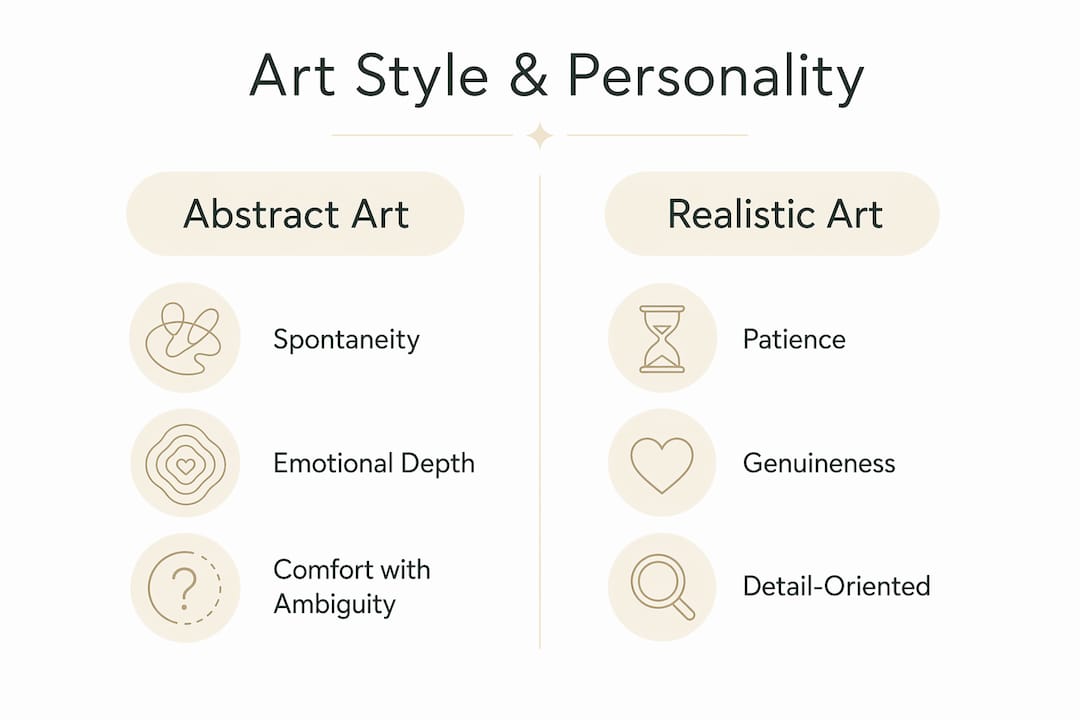
| Art style | Personality traits it often signals |
|---|---|
| Abstract | Spontaneity, emotional depth, comfort with ambiguity |
| Realistic or photographic | Patience, appreciation for detail, grounded thinking |
| Minimalist | Preference for clarity, calm, and intentional living |
| Statement pieces | Confidence, boldness, desire to lead a conversation |
| Travel and place-evocative | Curiosity, nostalgia, a life shaped by movement and memory |
Abstract art preferences indicate spontaneity and emotional depth. Realistic art preferences suggest patience and a genuine appreciation of detail. These are not rigid rules, but they are consistent enough to be worth paying attention to.
Pro Tip: Walk through your home and note the dominant style across all your pieces. If they feel disconnected, your space may be reflecting a version of yourself you have already grown past.
Statement pieces deserve special mention. A single large, bold work on an otherwise quiet wall says something very specific: you are not afraid to take up space. You can read more about using statement art to communicate exactly that kind of confidence through your decor.
How to choose art that truly represents you
Choosing art with intention starts with honest self-reflection, not trend-scrolling. Thoughtfully curated wall art enhances emotional well-being by providing meaning and fostering authenticity in your living environment. Generic choices, the kind that match the sofa but say nothing about you, do the opposite.
Here is a practical approach to selecting art that actually fits:
-
Start with memory, not aesthetics. Think about a place, a feeling, or a moment that shaped you. Look for art that echoes that, whether it is a coastal print that recalls a summer you loved or a city glow that captures where you found yourself.
-
Consider color as mood. Warm golds and terracotta create energy and intimacy. Cool grays and deep blues bring stillness. Choose the emotional temperature you want a room to hold.
-
Look for thematic consistency. Your pieces do not need to match, but they should feel like they belong to the same story. A place-evocative collection built around travel memories, for example, creates a room that feels collected and effortless rather than assembled.
-
Avoid the purely decorative. If a piece does not make you feel something, it is filling space rather than telling your story.
-
Think long term. Art that reflects your values ages well. Art that reflects a trend does not.
Key Takeaways
Wall art reflects personality because it functions as a visual autobiography, shaped by emotion, memory, and identity rather than decoration alone.
| Point | Details |
|---|---|
| Art as autobiography | Environmental psychology confirms that home decor expresses emotional needs and personal identity. |
| Emotion drives selection | Color, subject matter, and scale all reflect how you want to feel, not just what looks good. |
| Psychology supports the connection | Awe-inducing art reduces physical stress markers and primes self-perception toward aspirational identity. |
| Style signals personality | Abstract, realistic, minimalist, and statement art each correlate with distinct personality traits. |
| Intentional choices matter | Art chosen for meaning supports emotional well-being; generic choices do not. |
Art as a quiet companion in your space
We have spent a lot of time thinking about what makes a space feel genuinely personal rather than simply styled. The answer, almost every time, comes back to the art on the walls. Not the furniture. Not the lighting. The art.
What strikes us most is how honest wall art tends to be. People will repaint a room to follow a trend, but they rarely replace a piece they truly love. That photograph from a road trip through the California coast, the abstract print that somehow captures exactly how a particular year felt, these pieces stay. They become part of the room’s memory.
We also notice that the spaces that feel most alive are rarely the most curated in a magazine sense. They are the ones where the art tells a story that only one person could tell. A travel memory display built from real places you have been carries a warmth that no catalog piece can replicate.
The most useful shift you can make is to stop thinking of wall art as decoration and start thinking of it as a quiet companion. It is there every morning. It shapes how you feel in a room without you noticing. Choose it like it matters, because it does.
— Calicuration
Calicuration: wall art that carries your story
Every piece in the Calicuration collection starts with a real place and a real moment. Our founder shot each image on location, from the California coast to desert light to city glow at dusk. The result is art that already carries a story before it reaches your wall.
If you are ready to fill your space with something that feels personal rather than generic, the Calicuration wall art collection is a good place to start. Each print is custom-produced on demand, so nothing sits in a warehouse waiting to be someone’s afterthought. And because giving back is part of who we are, 5% of every order supports community impact efforts in Los Angeles and New York City. Art that means something, made with care, for spaces that deserve both.
FAQ
Why does wall art feel so personal?
Wall art feels personal because it reflects your emotional history, values, and aspirations through the imagery and styles you are drawn to. Environmental psychology describes this as environmental profiling, where your home becomes an autobiography of your inner life.
What does abstract art say about your personality?
Abstract art preferences indicate spontaneity, emotional depth, and comfort with ambiguity. People drawn to abstract work tend to process the world through feeling rather than rigid structure.
Can wall art actually affect your mood?
Yes. Awe-inducing art is linked to lower levels of proinflammatory cytokines and reduced physical stress symptoms. The right piece does not just look good. It changes how you feel in a room.
How do I choose art that reflects my true personality?
Start with memory and emotion rather than trends. Look for imagery that echoes a place, feeling, or moment that shaped you, and prioritize thematic consistency over matching colors.
Is displaying posters or photography a valid form of self-expression?
Absolutely. Psychology confirms that displaying admired figures and meaningful imagery is an identity tool. It reinforces values, builds self-perception, and keeps aspirational goals visible in daily life.