

Wall art is defined as any visual piece placed on a wall to shape the aesthetic, mood, and identity of an interior space. Far beyond decoration, the role of wall art in interior design is structural and emotional. It anchors furniture, guides the eye, and tells the story of the person who lives there. Whether you’re drawn to the salt air of a coastal photograph or the warm glow of a desert horizon, the art you choose becomes the heartbeat of your home.
How wall art functions as a structural element in interior design
Wall art creates focal points and visual hierarchy, giving every room a place for the eye to land and rest. Without that anchor, even beautifully furnished spaces can feel unresolved, like a sentence without a period. Art placed above a sofa, bed, or console table grounds the furniture arrangement and signals where the room’s center of gravity lives.
Scale and proportion are the two most overlooked factors when decorating walls with art. A piece that is too small floats awkwardly above a large sofa. A piece that is too large overwhelms the furniture beneath it. Vertical art adds perceived height to a room, while horizontal compositions expand the sense of width. This means a single framing decision can visually reshape a room without moving a single piece of furniture.
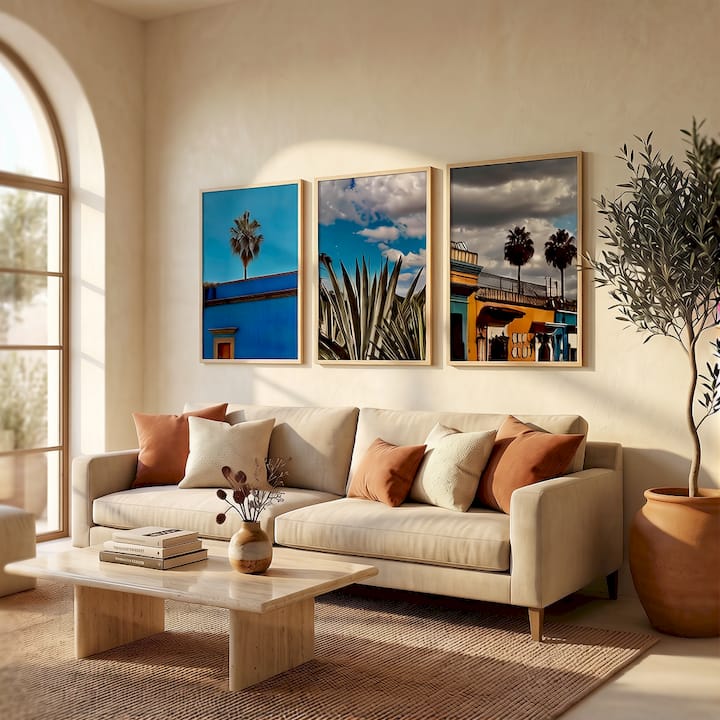
Art also softens architectural features that feel cold or abrupt. A bare concrete wall becomes a canvas for warmth. A narrow hallway becomes a gallery that draws you forward. These are not decorative choices. They are architectural ones.
Pro Tip: Follow the 2/3 rule when sizing art above furniture. Art should span roughly two-thirds the width of the sofa, bed, or console below it. This proportion visually anchors the arrangement and prevents the floating effect that makes rooms feel incomplete.
| Placement scenario | Effect on space |
|---|---|
| Vertical art on low-ceiling wall | Creates upward visual pull, adds perceived height |
| Horizontal art above wide sofa | Expands width, unifies furniture grouping |
| Oversized single piece on feature wall | Defines the room’s focal point with confidence |
| Small art centered on large wall | Creates visual disconnection, weakens composition |
What does wall art do for your mental health and mood?
The psychological benefits of wall art are grounded in measurable science, not just feeling. Viewing art for 20 minutes reduces cortisol levels by 22% and lowers inflammatory proteins in the body. That is a meaningful physiological shift from something as simple as what hangs on your wall.
“Active and passive engagement with art activates neural circuits involved in pleasure and emotion regulation.”Psychology Today
This means you do not need to study a painting to benefit from it. Simply living with art that resonates with you activates emotion regulation circuits in the brain, improving mental health outcomes over time. For homeowners in dense urban environments, this is particularly significant.
Natural imagery carries its own category of benefit. High-quality landscape prints produce restorative effects nearly equivalent to actual nature views, making them a practical solution for city apartments with no green outlook. A photograph of a redwood forest, a Pacific coastline, or a still alpine lake does genuine cognitive work in your home.
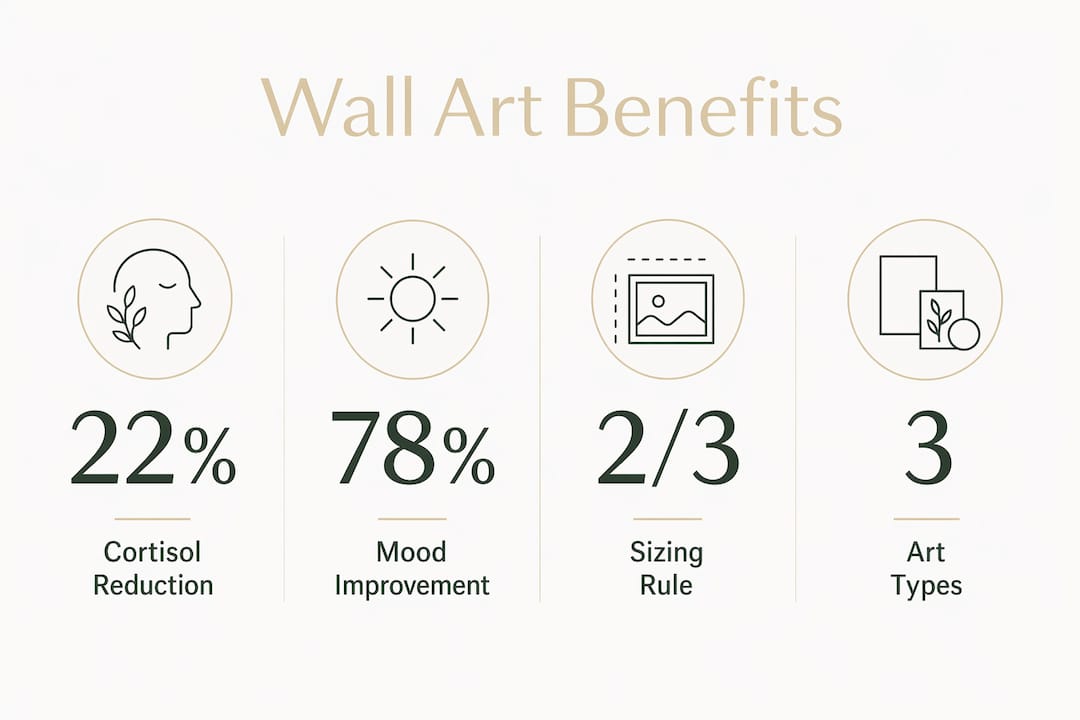
Long-term exposure matters too. Biophilic art environments reduce depression symptoms in 78% of participants and anxiety symptoms in 74%, with benefits that strengthen over 12 months. This is not a short-term mood lift. It is a sustained shift in how your home supports your wellbeing. The art you choose to live with is, in a quiet way, a health decision.
How to choose and position wall art for maximum impact
Choosing art for your home works best when you start with the room’s purpose, not its color palette. A bedroom calls for imagery that slows the nervous system: soft coastal light, open sky, or still water. A home office benefits from something that sharpens focus or sparks curiosity. A living room can hold bolder, more complex work because it is a space for conversation and energy.
Here are the principles that consistently produce cohesive, personal interiors:
-
Match color temperature to room function. Warm-toned art (golden hour, amber desert, firelit scenes) suits social and relaxing spaces. Cool-toned work (blue water, misty mountains, gray city glow) suits focused or restful rooms.
-
Choose subject matter with intention. Natural imagery supports cognitive restoration and mood improvement. Abstract work activates curiosity and energy. Travel photography grounds a space in personal memory and story.
-
Use art to define zones in open layouts. In open-plan living and dining areas, a large piece above the sofa and a smaller grouping above the dining table create two distinct visual zones without a single wall between them.
-
Avoid the common mistake of hanging art too high. Eye level is the standard, which means the center of the piece sits at roughly 57 to 60 inches from the floor. Most homeowners hang art 6 to 8 inches too high, which disconnects it from the furniture below.
-
Rotate pieces seasonally. Refreshing wall art regularly prevents habituation and sustains the psychological engagement that makes art beneficial in the first place.
You can also explore place-evocative wall art to understand how specific imagery styles create distinct moods across different rooms.
Canvas prints vs. photographic prints vs. textile art: what works where?
Different art forms bring different qualities to a space, and understanding those differences helps you choose with confidence rather than guesswork.
Canvas prints carry texture and visual weight. The slight surface variation of a canvas catches light differently throughout the day, giving the piece a living quality that flat prints cannot replicate. They suit living rooms and bedrooms where warmth and depth are the goal.
Photographic prints on aluminum or fine art paper deliver precision and clarity. They are ideal for spaces where you want the image to feel immediate and present, like a hallway or a home office where a single strong image sets the tone without competing with other elements.
Textile and tapestry art does something neither canvas nor print can: it absorbs sound. Fabric-based wall pieces soften acoustics and add tactile warmth, making them particularly effective in rooms with hard floors and bare walls that tend to echo. They also layer beautifully with woven trays, linen cushions, and natural textures.
3D sculptural wall art introduces shadow play and dimension. As light shifts across the day, the piece changes character. This makes sculptural work especially compelling in spaces that receive strong directional light.
A single well-chosen piece can unify design elements that feel unrelated, by echoing colors and motifs across the room. This is often more effective than adding more textiles or accessories to achieve cohesion.
Key takeaways
Wall art is the single most versatile tool in interior design, shaping spatial perception, emotional wellbeing, and personal identity simultaneously.
| Point | Details |
|---|---|
| Art as structural anchor | Use the 2/3 rule to size art above furniture and prevent visual disconnection. |
| Measurable mood benefits | Viewing art for 20 minutes reduces cortisol by 22%, making art a genuine wellbeing investment. |
| Natural imagery for urban homes | Landscape and nature prints produce restorative effects nearly equal to real nature views. |
| Art type matters | Canvas adds warmth, photographic prints add clarity, and textiles soften acoustics. |
| Rotate to sustain benefits | Refreshing art seasonally prevents habituation and maintains psychological engagement. |
Why we think most homeowners are still underusing wall art
Most people treat art as the final step, something to fill the wall once everything else is in place. We think that is the wrong order entirely. The art you choose should inform the room, not respond to it. When you start with a piece that carries meaning, whether it is the light over the California coast or the stillness of a mountain lake, the furniture and textiles you choose around it naturally fall into harmony.
We have seen homeowners spend months adjusting paint colors and rearranging furniture, searching for a cohesion that one considered piece of art would have delivered immediately. Statement wall art is not a bold risk. It is a design anchor that makes every other decision easier.
The other thing worth saying: art that connects to a real place or memory carries emotional weight that generic decor simply cannot replicate. Your home should feel like a memory map, collected and personal, not assembled from a catalog. That quality of feeling is what transforms a well-decorated room into a space that genuinely restores you.
— Calicuration
FAQ
What is the role of wall art in interior design?
Wall art anchors furniture arrangements, creates focal points, and shapes the emotional tone of a room. It functions as both a structural and expressive design element, not simply decoration.
How does wall art affect your mood at home?
Viewing art reduces cortisol by 22% in 20 minutes and activates brain regions tied to pleasure and emotion regulation. Natural imagery in particular supports cognitive restoration and sustained mood improvement.
What size art should I hang above my sofa?
Art should span approximately two-thirds the width of the sofa beneath it. This proportion visually anchors the furniture and prevents the disconnected look that comes from pieces that are too small.
How often should I change my wall art?
Rotating art seasonally or annually helps prevent habituation, which is the tendency to stop noticing what is always there. Regular updates sustain the psychological and aesthetic benefits that make art valuable in the first place.
What type of wall art works best in a bedroom?
Soft natural imagery, coastal photography, or landscape prints work well in bedrooms because they support relaxation and cognitive restoration. Biophilic art environments have shown measurable reductions in anxiety symptoms over time, making them a thoughtful choice for the room where you rest.