

Choosing art as a gift for someone else’s home means selecting a piece that completes their space, not just one that catches your eye. This is the core principle behind thoughtful art gifting, and it separates a piece that gets displayed proudly from one that ends up in a closet. When you choose art gift for someone else’s home, you are essentially acting as a curator for a space you do not control. The good news is that with a few clear observations and a little intention, you can get it right. This guide walks you through how to read a room, pick the right format, and give a gift that feels like it was always meant to be there.
How to choose an art gift for someone else’s home by reading their space
The most common gifting mistake is buying art you love rather than art that fits the recipient’s world. Their home already tells a story. Your job is to listen to it before you shop.
Start with these three lenses:
- Color palette. What tones dominate their living room or bedroom? Warm terracottas and wood tones call for earthy, sun-warmed photography. Cool grays and whites pair well with minimalist line art or monochrome prints. Matching their color palette is the single most effective way to prevent a mismatch.
- Art density. Do they already have a gallery wall, or are their walls mostly bare? A home with curated, sparse art signals a collector’s eye. A blank wall in a new home is an open invitation for a statement piece.
- Lifestyle context. A nature lover’s home filled with plants and linen textures calls for biophilic elements like coastal photography or botanical prints. A city dweller with industrial furniture leans toward architectural or urban imagery.
If you cannot visit their home in person, their Instagram feed or Pinterest boards are a reliable style guide. Look at what they save, what they wear, and how they decorate for seasons. These patterns reveal aesthetic preferences more honestly than asking directly.
Pro Tip: Before you purchase, do a quick style-matching audit. Screenshot three to five images from their social media that show their home or taste. Hold your shortlisted art options next to those screenshots. If the colors and mood feel like the same conversation, you are on the right track.
What art medium, size, and format works best as a gift?
Format matters as much as the image itself. A stunning photograph printed too small for a dining room wall loses all its presence. A large canvas gifted to someone in a studio apartment creates a logistical headache. Wall space and lighting should guide your size decision before anything else.
Here is a quick comparison to help you decide:
| Medium | Best for | Considerations |
|---|---|---|
| Fine art print (unframed) | Flexible gifting, any budget | Recipient chooses their own frame and placement |
| Framed canvas | Ready-to-hang, immediate impact | Confirm wall space and decor style first |
| Original artwork | Collectors, milestone gifts | Higher cost, more personal risk |
| Mixed-media or handmade | Unique, artisan-minded recipients | Harder to predict fit; works best when you know them well |
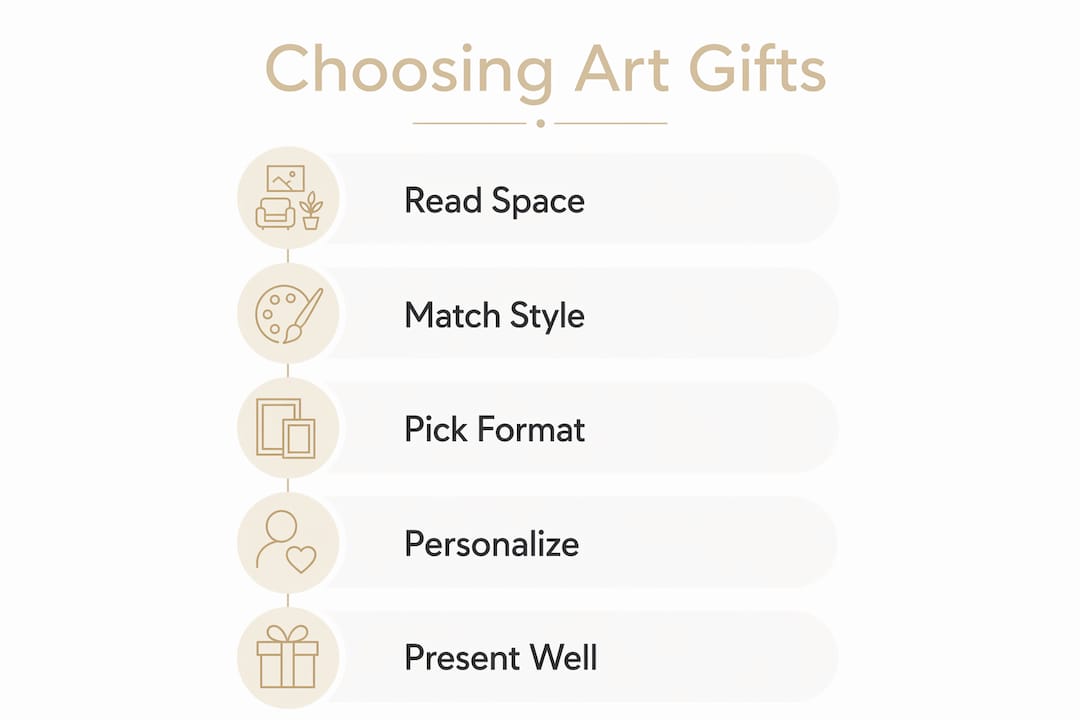
Prints and reproductions are often the safest choice when you are uncertain. They allow the recipient to frame the piece in a style that suits their home, which removes one variable from your decision. For a housewarming or new home gift, a ready-to-hang framed canvas signals more intention and saves the recipient a step.
Pro Tip: When in doubt about size, go one size smaller than you think. A 16x20 print feels generous and fits most walls. A 36x48 canvas requires a specific wall and a specific commitment.
How do you make an art gift feel personal and meaningful?
The most memorable art gifts carry a story. They reference a shared memory, celebrate something the recipient loves, or capture a place that matters to them. This is where personalized art gifts move beyond decoration and become something a person keeps for decades.
A few approaches that create genuine emotional resonance:
- Shared geography. If you both traveled somewhere together, a photograph from that region turns a wall into a memory. Coastal California light, a desert road at dusk, a city skyline at golden hour. These images carry weight when they echo a real experience.
- Minimalist line art. Line art capturing a moment’s feeling is often more versatile and emotionally resonant than hyper-realistic portraits. It suggests rather than states, which gives the recipient room to project their own meaning onto it.
- Handmade and artisan pieces. Handmade art communicates care in a way that mass-produced items simply cannot. A piece made with authentic materials, whether sea glass, reclaimed wood, or hand-pulled ink, signals that you chose it with intention.
- Subject matter tied to their passions. A surfer’s home deserves ocean photography. A chef’s kitchen wall welcomes something warm and textured. Matching subject matter to lifestyle adds a layer of thoughtfulness that the recipient will notice every time they look at the piece.
The goal is to give something that feels like it was always meant to live in their home, as if the wall had been waiting for it.
Thoughtful presentation and practical considerations for gifting art
How you present the gift shapes how it is received. Personalized notes and gift-appropriate wrapping add a layer of care that complements the art itself. A handwritten card explaining why you chose the piece, what it reminded you of, or where it was captured transforms a beautiful object into a story.
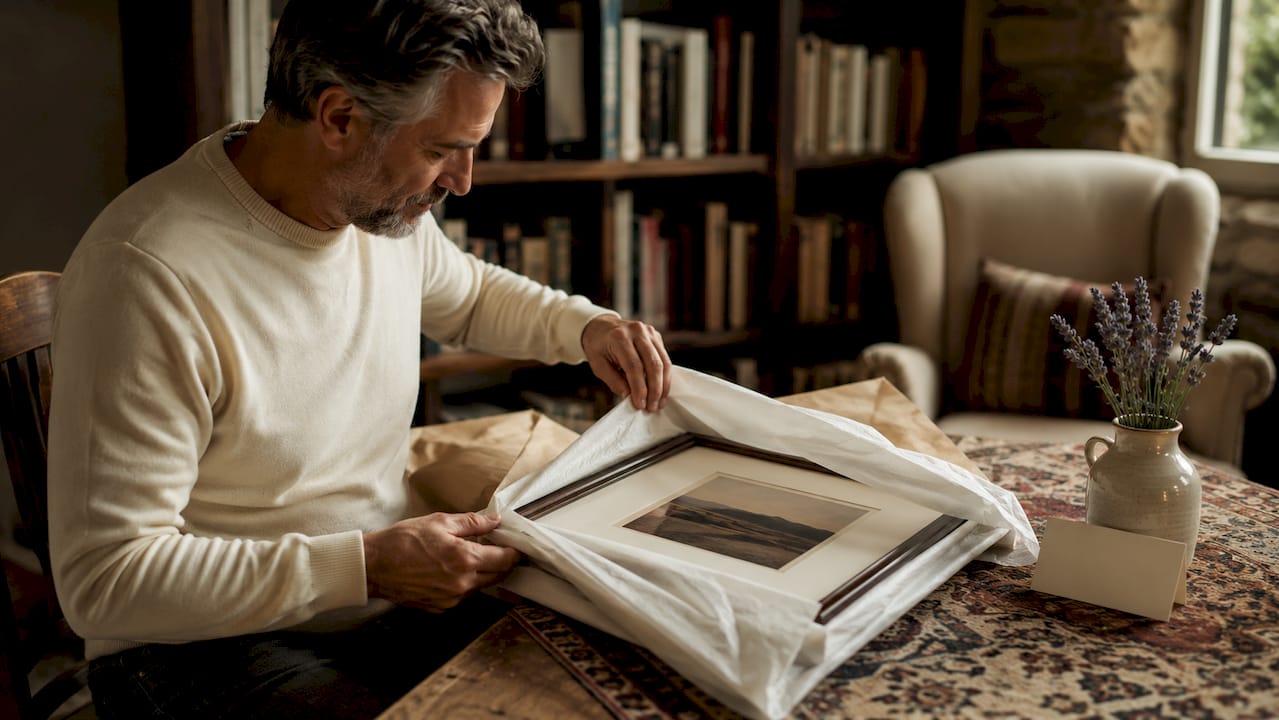
Practical details matter too. Budget for framing and shipping from the start, not as an afterthought. A $150 print can easily become a $300 gift once you account for a quality frame and safe delivery. Being realistic about the full cost helps you make better decisions about format and size.
Here is a simple budget and logistics reference:
| Factor | What to plan for |
|---|---|
| Framing | Add 30 to 50 percent of print cost for a quality frame |
| Shipping | Flat art ships safely; rolled canvas adds flexibility |
| Personalized message | Always include one. It costs nothing and means everything |
| Scale check | Confirm approximate wall dimensions before ordering large pieces |
The most common gifting errors are ignoring scale and choosing based on your own taste rather than the recipient’s. A style-matching audit, a size reality check, and a thoughtful note solve all three problems before they happen.
Pro Tip: If you are gifting art for a new home, consider pairing it with a guide on hanging art without wall damage. It shows you thought about the full experience, not just the object.
Key takeaways
The most effective way to choose an art gift for someone else’s home is to read their space first, match their palette and lifestyle, then select a format and size that fits their walls and your budget.
| Point | Details |
|---|---|
| Read the room before you shop | Assess color palette, art density, and lifestyle context to avoid style mismatch. |
| Match medium to certainty level | Prints offer flexibility; framed canvas signals more intention for milestone gifts. |
| Infuse personal meaning | Choose subject matter tied to shared memories or the recipient’s passions for lasting impact. |
| Budget for the full cost | Include framing and shipping to avoid surprises and make smarter format decisions. |
| Present with intention | A handwritten note explaining your choice transforms a gift into a story. |
Why we think most art gifts miss by one degree
We have seen a clear pattern in how people approach art gifting. They find something beautiful, something they would hang in their own home, and they wrap it up with confidence. The piece is genuinely lovely. But it lands in a space where the colors pull in a different direction, or the scale feels off, or the subject matter has no connection to the person receiving it.
Shifting from art you love to art that completes a room is a small mental adjustment with a large impact. It is not about suppressing your taste. It is about directing your taste toward someone else’s story. The best art gifts we have ever seen given were not the most expensive or the most technically impressive. They were the ones where the giver clearly spent time thinking about the recipient’s world, not their own.
Our honest advice: spend half your shopping time observing before you start browsing. Look at their home, their feed, their bookshelves. Then shop with that picture in mind. You will know the right piece when you see it, because it will feel like theirs, not yours.
— Calicuration
Find the right piece in Calicuration’s curated collection
When you are ready to browse, Calicuration’s California wall art collection offers story-driven photography printed on demand, so every piece arrives fresh and made with care. From coastal light to desert stillness to city glow, each image is founder-shot and curated to make a space feel warmer and more personal.
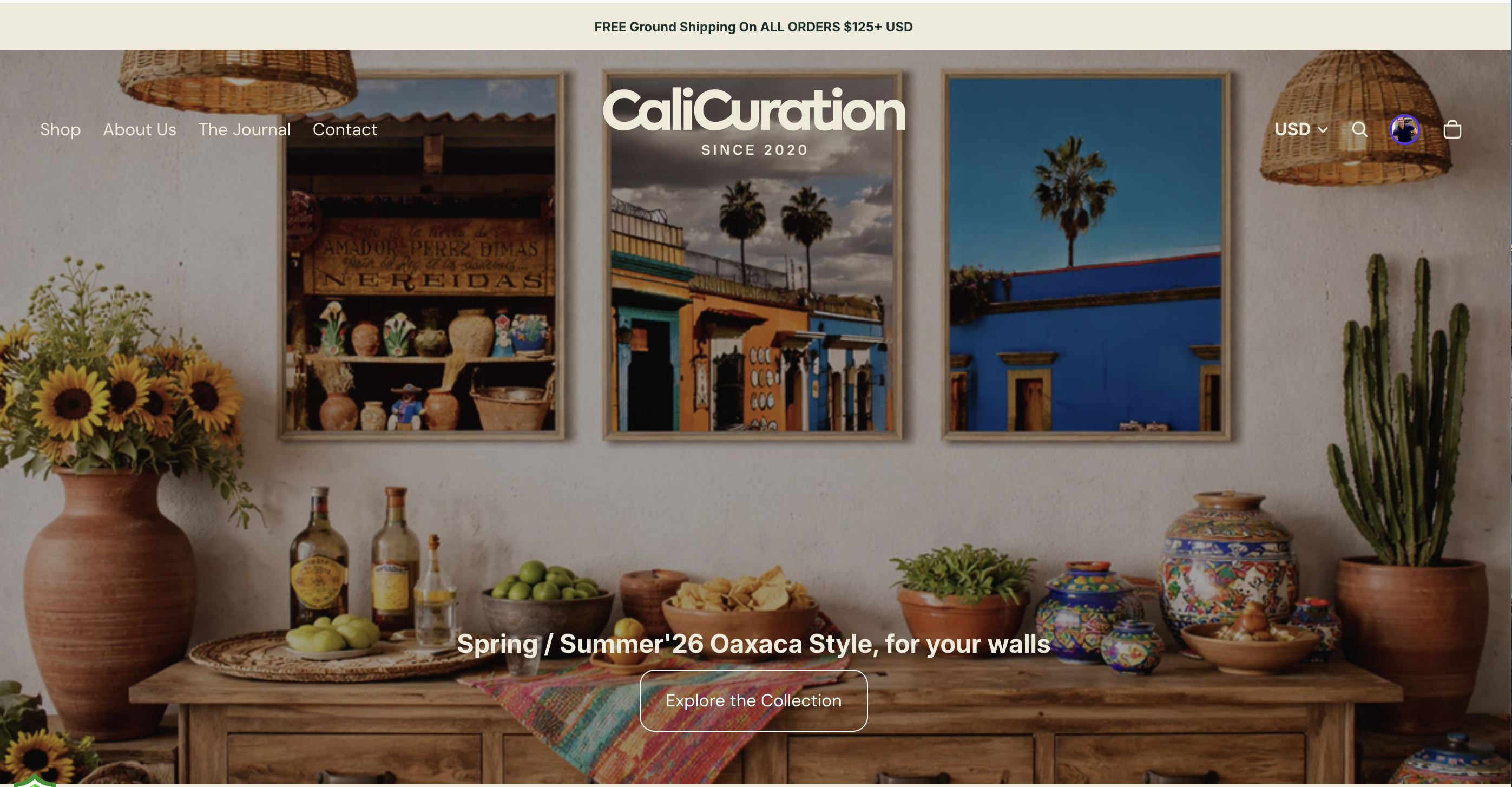
Whether you are looking for a housewarming gift, a birthday piece, or something that captures a shared place, the collection spans styles from minimalist to bold. Every order also contributes 5% to community impact efforts in Los Angeles and New York City, so the gift gives twice. Browse the full collection and filter by mood, color, or format to find the piece that feels like it was made for their walls.
FAQ
What is the safest art gift for someone whose taste I am unsure of?
A fine art print in a neutral palette is the safest choice. It allows the recipient to frame it in their own style and fits most home aesthetics without clashing.
How do I choose the right size art gift for someone’s home?
Estimate the wall space available and default to a size slightly smaller than you think is needed. A 16x20 or 18x24 print works well in most rooms without overwhelming the space.
Should I frame art before gifting it?
Framing adds immediate impact and signals intention, but only if you are confident about the recipient’s decor style. When uncertain, gifting an unframed print lets them choose a frame that suits their home.
What makes a personalized art gift more meaningful?
Art tied to a shared memory, a place the recipient loves, or a subject connected to their passions creates emotional resonance that purely decorative pieces rarely achieve.
How much should I budget for an art gift including framing and shipping?
Plan to add 30 to 50 percent of the print price for quality framing, plus shipping costs. A $100 print often becomes a $180 to $200 gift when fully presented and delivered.