

Photography is defined as the most personal art form you can hang on a wall. Unlike a mass-produced print or a generic canvas, a photograph carries a specific moment, a real place, and a feeling that belongs to you. That is why photography makes meaningful decor in a way no other medium can match. Environmental psychology research confirms that physical prints anchor memories into the daily rhythms of a home, creating a sense of belonging that digital images simply cannot replicate. When you walk past a photograph of a Pacific coast sunrise or a dusty desert road every morning, your space stops being just a room and starts feeling like a memory map.
Why photography makes meaningful decor: the emotional case for prints
Printed photographs create a stronger emotional connection than digital images because they demand a physical presence in your life. A photo on your phone competes with thousands of other images. A print on your wall stands alone, asking you to slow down and look. Physical prints foster belonging in ways that screens cannot, because they anchor a memory to a specific place in your home rather than to a scrollable feed.
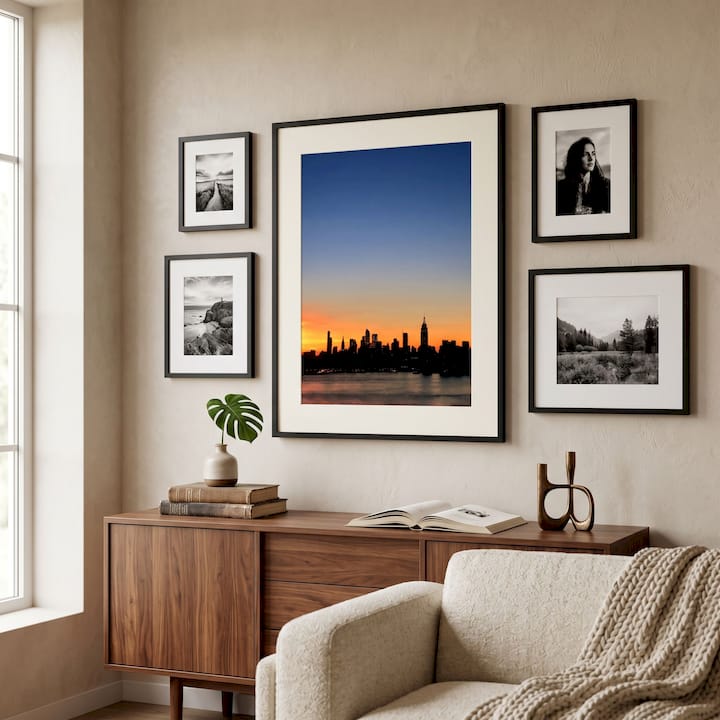
The tactile quality of a print matters more than most people realize. A matte fine-art paper print absorbs light softly. A metallic or acrylic surface catches it differently at 8 AM than at 8 PM. These material qualities make a photograph feel alive in a room. Printed photos invite intentional memory revisiting, which is why they trigger a deeper emotional response than the same image viewed on a screen.
Pro Tip: Choose your print material based on the room’s light. Matte papers work beautifully in bright, south-facing rooms. Metallic or acrylic finishes reward rooms with warmer, lower light, where they glow rather than glare.
When choosing prints for your home, consider these material and finish options:
-
Fine-art matte paper: Warm, painterly texture that softens bold images
-
Acrylic face mount: Glass-like clarity that makes colors pop in darker rooms
-
Canvas wrap: Relaxed, gallery feel that suits casual living spaces
-
Metal print: Crisp and modern, ideal for architectural or landscape photography
What makes photography a powerful personal design language?
Photography in decor works best when it functions as a personal design language rather than random decoration. A well-curated wall tells a story about who you are, where you have been, and what you value. That narrative quality is what separates a meaningful space from a room that simply has things on the walls.
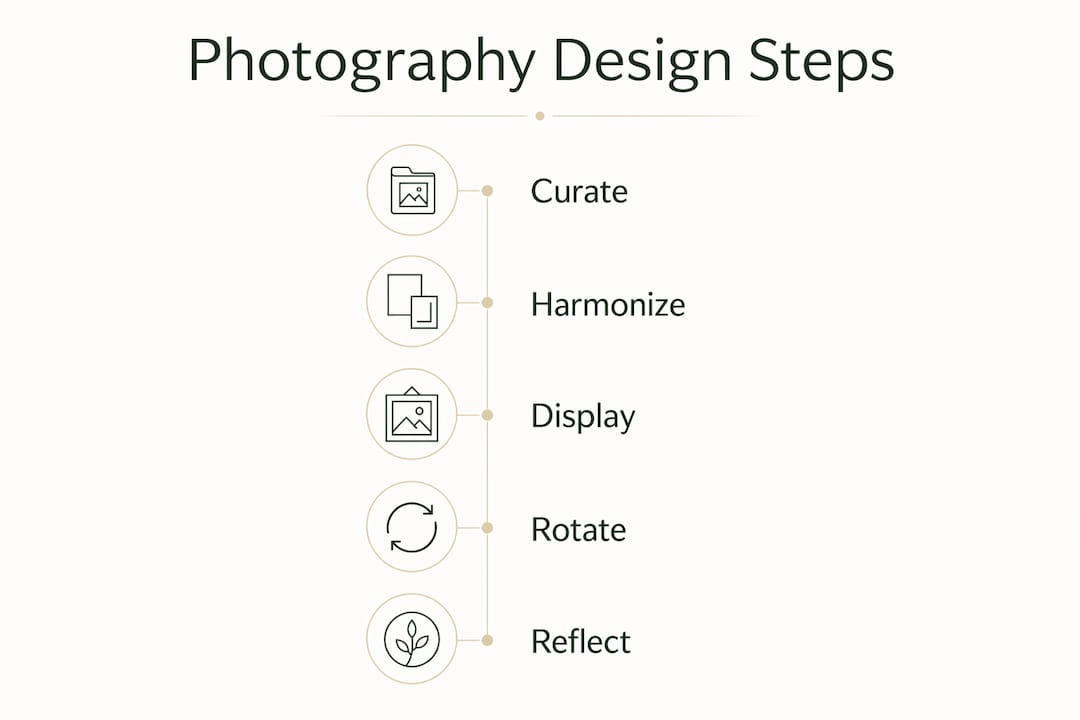
Intentional curation creates rhythm. When you choose images that share a tonal palette, a subject matter, or an emotional mood, the room breathes as a whole. A collection of coastal photographs in soft blues and warm golds reads as a cohesive statement. A random mix of unrelated prints reads as noise. The difference lies in the edit, not the quantity. Photographic decor reflects values and history, giving a room warmth and individuality that no furniture purchase can replicate.
Photography also offers a flexibility that other art forms rarely match. Seasonal swaps and evolving collections let your walls grow with you, reflecting new chapters without requiring a full redesign. A travel photograph from a recent trip can replace a winter landscape in spring. Your walls stay current without feeling trendy. This is what wall art and identity researchers describe as a living environment: one that evolves as you do.
Key principles for building a personal photographic design language:
-
Choose images connected to real experiences, not just aesthetic appeal
-
Limit your palette to two or three dominant tones across a grouping
-
Mix scales intentionally: one large anchor image with smaller supporting prints
-
Leave breathing room between frames so each image can be read clearly
-
Revisit your display seasonally and retire images that no longer resonate
How to choose and style photography for maximum impact
Selecting the right photographs starts with personal meaning, not visual trend. An image that stops you mid-scroll because it reminds you of a specific afternoon, a particular quality of light, or a place that changed how you see the world will always outperform a beautiful but generic image. Travel memory displays work especially well because they carry both aesthetic beauty and narrative weight.
Once you have your images, styling them well is a matter of scale and placement:
-
Identify your anchor point. Choose one image as the visual center of gravity. This is usually your largest or most emotionally significant piece.
-
Match scale to the room. Large oversized prints create focal points in high-traffic spaces like living rooms and hallways. Smaller, layered groupings suit intimate spaces like bedrooms and reading nooks.
-
Frame with intention. A simple black or natural wood frame keeps the image primary. Ornate frames compete with the photograph itself.
-
Group in odd numbers. Three or five prints grouped together feel more natural to the eye than even-numbered arrangements.
-
Rotate regularly. Rotating displays keeps emotional resonance active and prevents your decor from fading into background noise.
Pro Tip: Match the mood of the image to the function of the room. A calm, wide-open landscape suits a bedroom. A vibrant city scene or a sun-drenched coastal shot energizes a kitchen or home office.
What psychology says about photos in your home
Displaying personal photographs does more than decorate a wall. It actively shapes how you feel in a space. Printed photographs connect generations by preserving moments over time, turning a home into a living archive of family legacy rather than just a place to sleep and eat.
Child development research adds a specific and striking finding. Children who see themselves in family portraits develop a stronger sense of identity and self-worth. That finding means the photographs on your walls are not just decor for adults. They are part of how younger family members understand who they are and where they belong.
“Printed photos help people slow down and revisit memories, contrasting with the fleeting nature of digital images. That intentional pause is where emotional comfort lives.” — Why framing your family photos matters
The importance of photography in decor extends beyond aesthetics into genuine psychological well-being. A home filled with images that carry personal meaning becomes a place of emotional restoration, not just physical shelter.
Key Takeaways
Photography makes meaningful decor because it anchors personal memory, reflects identity, and creates emotional comfort in ways that generic art cannot replicate.
| Point | Details |
|---|---|
| Prints outperform digital images | Physical photographs anchor memories to a specific place in your home, creating stronger emotional ties. |
| Curation creates cohesion | Choosing images with shared tones and themes builds a personal design language rather than visual clutter. |
| Scale and placement matter | Oversized prints anchor high-traffic rooms; smaller groupings suit intimate spaces. |
| Rotation keeps walls alive | Swapping images seasonally prevents decor from fading into background noise and reflects your evolving life. |
| Photos support well-being | Displaying personal photographs builds identity, belonging, and emotional comfort for every person in the home. |
Why we believe curated photography changes how a space feels
We have watched spaces transform when the right photograph goes up on a wall. Not because the room changed structurally, but because the image gave the room a point of view. A wide shot of the California coast at golden hour does something to a living room that a neutral abstract canvas simply cannot do. It makes the air feel lighter. It pulls a memory forward.
What we have learned from living with rotating photo displays is that intentionality matters more than volume. One carefully chosen image does more work than a dozen random prints. The spaces that feel most collected and effortless are almost always the ones where someone made deliberate choices and then had the discipline to stop. Resist the pull toward clutter. Let each photograph breathe. And as your life changes, let your walls change with it.
— Info
Calicuration’s photography wall art, made for spaces that mean something
Every photograph in the Calicuration collection is founder-shot and story-driven, capturing the California coast, the Mojave desert, city glow at dusk, and landscapes that feel like a long exhale. Each piece is custom-produced on demand, so what arrives on your wall is made specifically for your space.
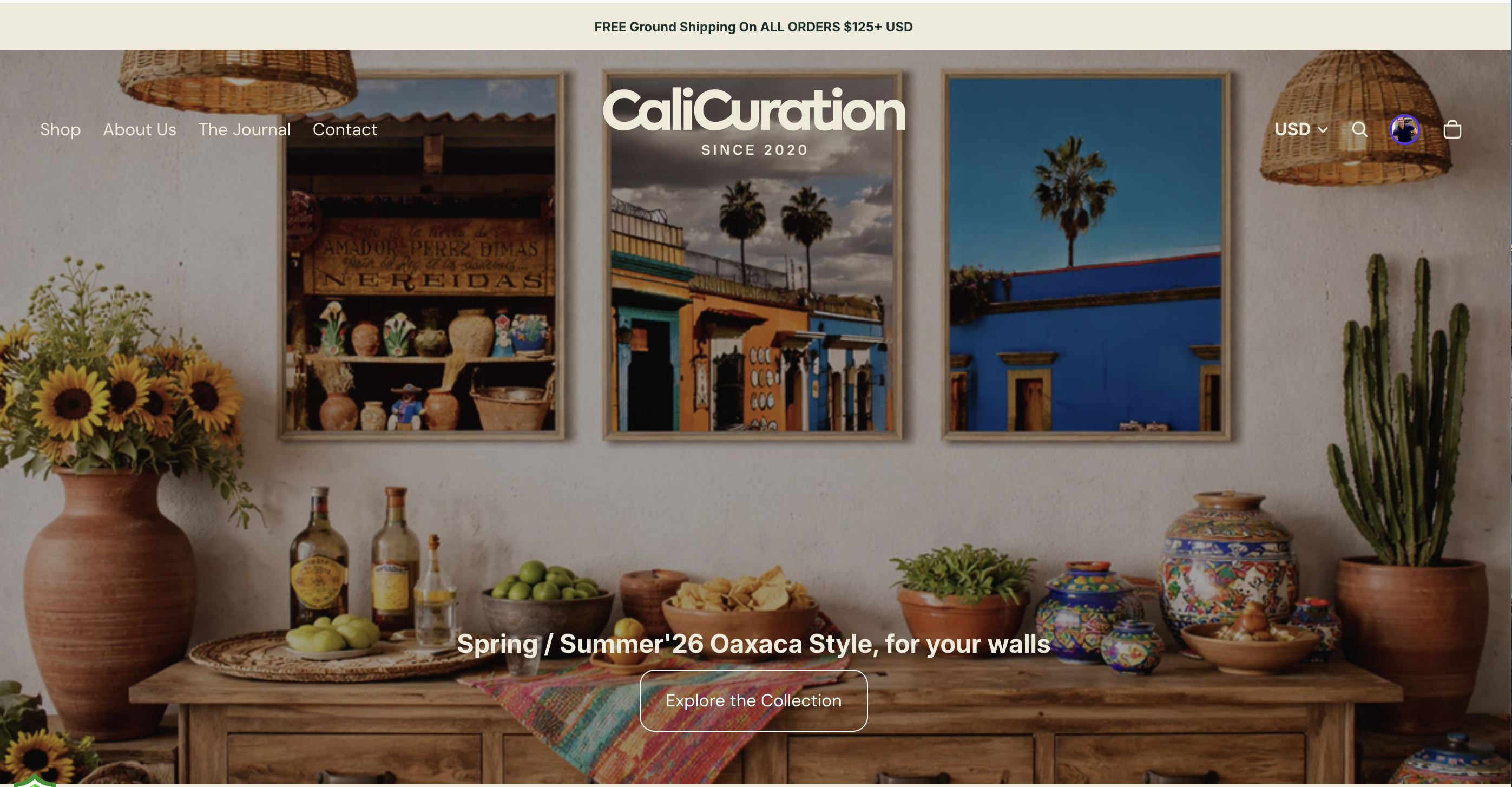
If you have been looking for photography wall art that carries real narrative weight rather than generic beauty, the Calicuration collection is a good place to start. Every order also gives back: 5% supports community impact efforts in Los Angeles and New York City. You can explore elevated wall decor styles to find the right format and finish for your room before you choose.
FAQ
Why does photography make better decor than generic art?
Photography carries a specific moment and place, giving it narrative weight that mass-produced art lacks. Personal or story-driven images create emotional connection and a sense of identity in a room.
What type of print material works best for home decor?
Fine-art matte paper suits bright rooms, while acrylic and metallic finishes reward spaces with warmer or lower light. The right material depends on your room’s light conditions and the mood of the image.
How often should you rotate photographs in your home?
Rotating displays seasonally keeps emotional resonance active and prevents your decor from becoming invisible background. Curating and rotating photo displays is one of the most effective ways to keep a space feeling current and personal.
Do family photos in the home affect children?
Child development research shows that children in family portraits develop stronger identity and self-worth. Displaying family photographs is a meaningful investment in how younger family members understand their place in the world.
How many photographs should you display in one room?
One strong anchor image paired with two to four supporting prints is usually enough. Scale relative to room architecture matters more than quantity: a single oversized print often does more work than a crowded gallery wall.