

California coastal wall art is defined as any painting, print, photograph, or mixed media piece that captures the ocean, beaches, and coastal scenery specific to California’s light and lifestyle. The best styles range from bold acrylic canvases to serene black-and-white photographic prints, each bringing a distinct mood to your space. Choosing the right type means thinking beyond generic beach scenes. The goal is art that feels personal, endures California’s intense sunlight, and makes your walls feel like a memory map of the coast you love.
1. Types of California coastal wall art worth knowing
California coastal wall decor spans a wide range of styles, and knowing the main categories helps you choose with confidence rather than guessing. Here are the types we find most compelling for real homes.
-
Photography prints. Founder-shot travel photography captures the raw, unfiltered mood of California beaches. A moody Venice Beach canvas brings the salt air and golden hour glow directly to your wall. Photography works in almost any room because it reads as both art and memory.
-
Abstract acrylic paintings. Abstract coastal art uses bold strokes or delicate washes to capture ocean moods rather than literal scenes. This style suits modern interiors that want emotional resonance without a postcard feel.
-
Black-and-white coastal photography. Black-and-white wall art fits nearly every interior style by adding polish without overwhelming. A framed black-and-white print of the California Central Coast reads as timeless rather than trendy.
-
Mixed media with natural textures. Pieces that incorporate sand, plaster, or layered paint add tactile warmth that flat prints cannot. These surfaces catch daylight and shift visually throughout the day, making the art feel alive.
-
Minimalist line art and graphic prints. Clean compositions with coastal color palettes, think pale sage, warm sand, and deep ocean blue, work beautifully in Scandinavian or modern California interiors.
-
Sunset and golden hour canvas prints. A California sunset canvas captures the warm amber light that defines Southern California evenings. This style carries strong emotional weight without feeling clichéd when the composition is original.
-
Harvest moon and night sky coastal art. Coastal scenes after dark offer a quieter, more introspective mood. A harvest moon beach piece works especially well in bedrooms where you want calm rather than energy.
Pro Tip: If you are unsure which style fits your space, photograph your room in natural daylight and compare it against art swatches. The light in the photo will reveal whether your room needs warmth, contrast, or texture.
2. Choosing the right materials and finishes
The material behind your art matters as much as the image itself, especially in California homes where sunlight is relentless.
-
Choose archival-quality inks. Museum-grade inks and thick pigments maintain vibrancy under intense California sunlight. Cheaper prints fade within a few years in south-facing rooms.
-
Opt for heavy acrylic pigments on canvas. Thick paint layers resist UV degradation better than thin washes. They also create the subtle surface texture that makes a piece feel handcrafted rather than mass-produced.
-
Consider frameless canvas edges. Frameless canvas edges and clean borders complement contemporary California homes with glass and concrete features. The absence of a frame keeps the focus on the image and suits modern minimalist rooms.
-
Look for UV-protective coatings. A matte or satin UV varnish on canvas prints extends color life significantly. Ask specifically about UV protection when ordering custom or on-demand pieces.
-
Avoid glossy paper prints in direct sunlight. Gloss finishes create harsh reflections in bright rooms. Matte or luster finishes read better in California’s high-light interiors.
Pro Tip: When ordering on-demand canvas art, request a test print on a small swatch before committing to a large format. Color rendering varies between printers, and what looks deep blue on screen can print as gray-green on low-quality canvas.
3. How to create a cohesive gallery wall with California coastal art
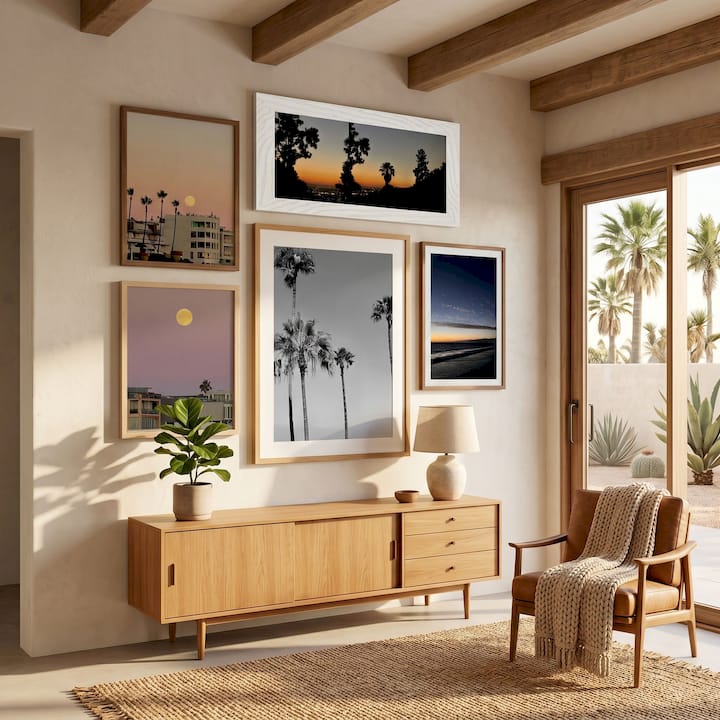
A gallery wall works best when you decide on a visual logic before you hang a single nail. Two approaches dominate California coastal interiors.
Uniform and disciplined. Uniform-sized gallery walls using matching square prints create a sleek, symmetrical aesthetic. This approach suits hallways and dining rooms where you want structure without distraction. Black-and-white photography in identical frames reads as a curated collection rather than a random assortment.
Eclectic and layered. Mixing sizes and color palettes creates bohemian charm. Varied art sizes and color schemes determine the energy and feel of the overall wall. This works well in living rooms where you want the space to feel collected and personal, like a wall that grew over years of travel.
Room-specific placement tips:
-
Living room: Anchor with one large statement piece, then build outward with smaller supporting prints.
-
Bedroom: Keep the palette calm. Neutral tones and black-and-white photography maintain a serene atmosphere without disrupting sleep-friendly visual depth.
-
Hallway: Use a single row of identically framed prints at eye level for a clean, gallery-style corridor.
-
Home office: One bold coastal canvas above the desk adds inspiration without visual noise.
4. Non-cliché California coastal wall decor ideas
Generic coastal decor, think starfish, rope, and cartoon waves, flattens the richness of what California’s coast actually feels like. These ideas push past the obvious.
-
Abstract ocean energy. Choose pieces that interpret movement and light rather than depicting a literal beach. Tactile, layered coastal art adds warmth and human connection that flat, illustrative prints cannot replicate.
-
Local color palettes without literal imagery. A canvas in deep Pacific blue, warm terracotta, and bleached sand evokes the coast without showing a single wave. This approach reads as sophisticated rather than themed.
-
Unexpected coastal iconography. A Venice Beach boardwalk scene at dusk, a fog-wrapped pier, or a palm tree silhouette against a moody sky all carry coastal identity without resorting to seashell clichés. Calicuration’s founder-shot photography captures exactly these kinds of specific, story-driven moments.
-
Mixed media with natural materials. Incorporating sand texture or plaster into a canvas creates a piece that feels like it came from the coast rather than a print shop. These surfaces shift with natural light throughout the day.
-
Monochrome coastal prints with strong composition. A well-composed black-and-white photograph of the California coast carries more emotional weight than a saturated, generic sunset print. Strong shadows and contrast make the image memorable.
Pro Tip: Read our full guide on avoiding generic California wall decor before you buy. The difference between art that feels personal and art that feels like a hotel room often comes down to composition and specificity, not price.
Key takeaways
The most effective California coastal wall art combines archival materials, specific composition, and a style that reflects your personal connection to the coast rather than a generic beach theme.
| Point | Details |
|---|---|
| Prioritize archival quality | Museum-grade inks and thick acrylic pigments prevent fading in California’s intense sunlight. |
| Match style to room mood | Use bold photography in living spaces and calm neutral tones in bedrooms for visual harmony. |
| Choose frameless for modern rooms | Frameless canvas edges complement glass and concrete California interiors without visual clutter. |
| Avoid literal coastal clichés | Abstract, story-driven, and texture-rich pieces feel personal and endure design trends longer. |
| Gallery walls need a visual logic | Decide between uniform discipline and eclectic layering before hanging a single piece. |
What we have learned curating California coastal art
The hardest thing about California coastal decor is resisting the pull of the obvious. Sunsets are beautiful. Waves are beautiful. But a wall covered in generic coastal imagery ends up feeling like a vacation rental rather than a home.
What we have found at Calicuration is that the pieces people return to most are the ones that capture a specific moment rather than a general mood. A fog-wrapped morning at Venice Beach. The exact amber of a Central Coast sunset. These images carry weight because they are real. They were shot by someone who was there, who felt the salt air and waited for the light.
Layered acrylics and tactile surfaces also transform spaces in ways that flat prints simply do not. We have seen minimalist California homes that felt cold and clinical until one textured canvas piece changed the entire energy of the room. Texture catches light. Light creates warmth. Warmth makes a space feel lived in.
Our honest advice: buy art that you would want to look at every morning, not art that matches your couch.
— Info
FAQ
What is California coastal wall art?
California coastal wall art includes paintings, prints, photographs, and mixed media pieces that evoke the ocean, beaches, and coastal scenery specific to California. The best pieces capture California’s unique light and lifestyle rather than generic beach imagery.
What materials last longest in sunny California rooms?
Museum-grade archival inks and heavy acrylic pigments maintain color vibrancy under intense sunlight. Frameless canvas with a UV-protective coating performs best in south-facing or high-light rooms.
How do I avoid clichéd coastal wall decor?
Choose art with specific, story-driven compositions rather than generic motifs like starfish or cartoon waves. Abstract interpretations of ocean energy and founder-shot photography both read as personal rather than themed.
What size art works best for a living room gallery wall?
One large anchor piece paired with smaller supporting prints creates visual balance. Uniform sizing creates a disciplined look, while mixed sizes produce an eclectic, collected feel.
Does black-and-white coastal photography work in colorful rooms?
Black-and-white wall art adapts to nearly every interior style by grounding the palette without competing with existing colors. It works especially well as an anchor piece in maximalist or colorful coastal arrangements.