

Wall art is a direct visual expression of personal and cultural identity, shaping how you connect with the spaces where you live and work. The role of wall art in identity goes far beyond decoration. Environmental psychology research confirms that art choices reflect emotional values, cultural roots, and aspirational self-image. What hangs on your walls tells a story about who you are, what you remember, and who you are becoming. This article explores the psychology behind those choices and offers practical ways to curate a space that feels genuinely yours.
How does wall art reflect and shape personal identity?
Wall art functions as a visual autobiography, symbolically capturing personal history and evolving identity. You do not choose a photograph of a sun-bleached California coastline simply because it looks good above the sofa. You choose it because something in that image resonates with a feeling, a memory, or a version of yourself you want to hold onto.
The psychology behind this is grounded in self-reflection. Research shows that individuals choose art based on personal resonance rather than trends or aesthetic matching alone. Recognition and emotional reaction guide authentic selections far more reliably than what is popular in a given season. That pull you feel toward a particular image is your latent identity speaking.
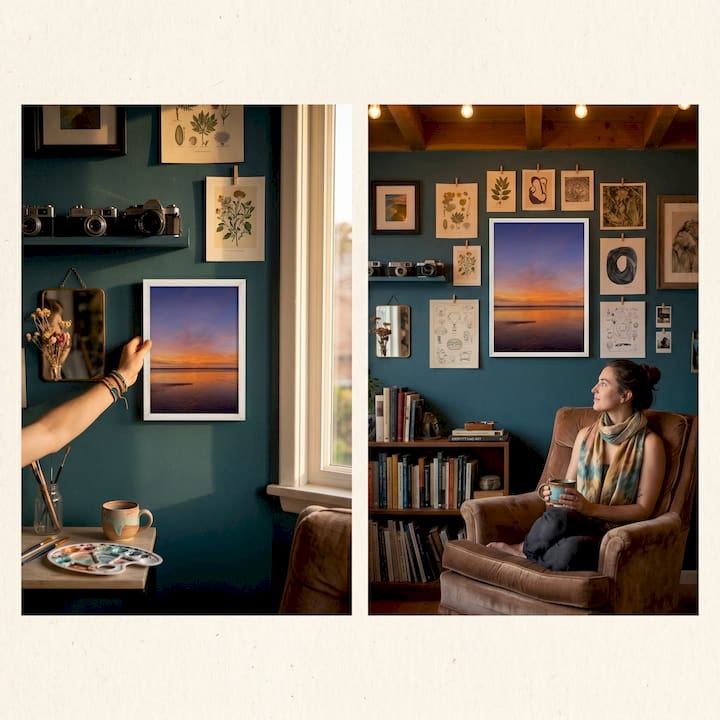
Symbolic imagery deepens this connection. A desert landscape might represent solitude and strength. A city glow at dusk might capture ambition and belonging. These are not random associations. They are the visual language of your inner world, made tangible on a wall.
Here is what drives authentic art selection:
-
Emotional recognition. You feel something specific when you look at the piece, not just general approval.
-
Personal memory. The image connects to a real experience, place, or relationship.
-
Aspirational resonance. The art reflects who you are working toward becoming, not just who you are right now.
-
Cultural anchoring. The imagery reflects heritage, community, or shared values that feel like home.
Pro Tip: Spend 30 days living with a piece before committing to a permanent placement. Your honest, repeated reaction over time reveals whether the art truly reflects you or simply matched the room’s color palette.
What psychological benefits does wall art provide?
Art in personal spaces does more than express identity. It actively supports emotional wellbeing, motivation, and comfort. Displaying posters or art of favorite characters, role models, or meaningful places helps young adults build personal identity, sustain motivation, and find emotional comfort. That is not a trivial outcome. It is a healthy tool for self-development.
“Art that connects deeply with personal values and aspirations acts as a daily reminder and anchor for one’s future self. Wall imagery serves as a symbolic cue, reinforcing self-concept and aspirations through repeated, subconscious exposure.”
This process is explained by Priming Theory. Repeated exposure to meaningful images in a personal space subtly primes motivation and reinforces identity traits over time. You absorb the message of your walls without consciously trying to.
The emotional benefits build in a clear sequence:
-
Comfort. Familiar, meaningful imagery creates a sense of safety and calm in your space.
-
Motivation. Aspirational art keeps your goals visible and emotionally present every day.
-
Identity reinforcement. Seeing your values reflected back at you strengthens your sense of self.
-
Reduced anxiety. Environmental psychology research confirms that thoughtfully placed art reduces anxiety and improves emotional wellbeing in interior spaces.
How can wall art influence place identity and belonging?
Place identity is the psychological bond between a person and a specific environment. Wall art is one of the most direct tools for building that bond. Strategic art integration improves wayfinding, reduces anxiety, and strengthens place identity in both homes and workplaces.
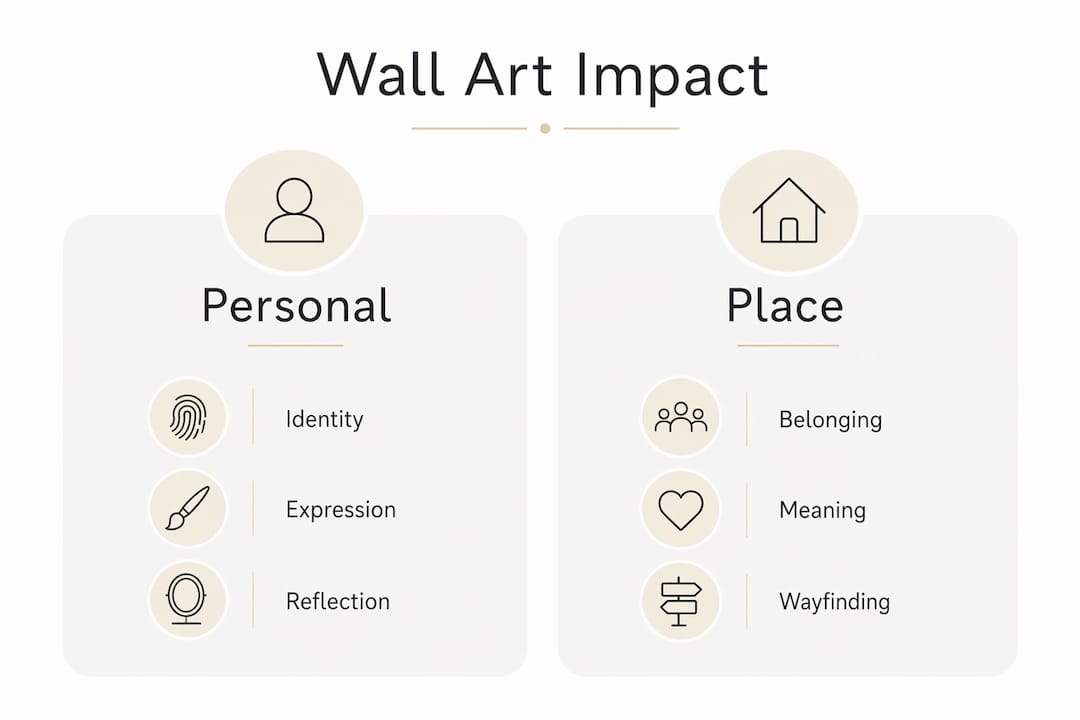
Culturally significant or thematic art anchors a space with shared meaning. A collection of travel photography from the California coast, for example, does not just fill a wall. It tells visitors and residents alike what this space values: openness, light, memory, and the feeling of being somewhere worth returning to.
The table below compares common art placement strategies and their spatial and emotional effects:
| Placement strategy | Spatial effect | Emotional effect |
|---|---|---|
| Large single statement piece | Creates a visual anchor and focal point | Signals confidence and clear personal taste |
| Thematic gallery wall | Builds narrative and visual depth | Evokes storytelling and personal history |
| Culturally symbolic imagery | Grounds the space in heritage or values | Fosters belonging and cultural pride |
| Aspirational travel photography | Expands the perceived scale of a room | Inspires curiosity and a sense of possibility |
| Rotating seasonal art | Keeps the space feeling alive and current | Encourages ongoing self-reflection |
Art placement strategies like scale and thematic grouping also enhance wayfinding. In a home with multiple rooms, distinct art themes help each space feel intentional and oriented. A calm coastal print in a bedroom signals rest. A bold city photograph in a home office signals focus and energy.
For more on how specific placement choices shape a room’s emotional tone, the guide on wall art in interior design offers a practical homeowner’s framework.
What practical approaches help you choose wall art authentically?
Authentic wall art selection starts with self-awareness, not shopping. Artwork in personal spaces communicates identity nonverbally, which means a piece chosen purely for trend or color coordination often feels hollow over time. The wall tells a story whether you intend it to or not.
Here is how to build a collection that genuinely reflects who you are:
-
Audit your reactions over time. Self-auditing emotional reactions over weeks reveals which pieces truly resonate versus which ones you simply tolerate. Trust the pieces that still move you after the novelty fades.
-
Combine memory, culture, and aspiration. A wall that only reflects the past feels like a museum. One that only projects the future feels disconnected. The most grounded collections weave all three together.
-
Resist trend-driven selection. What is popular in interior design right now may feel dated in two years. What genuinely connects to your values and experiences will feel right for decades.
-
Think in themes, not individual pieces. A cohesive visual story across your walls creates a stronger sense of identity than a collection of unrelated prints, however beautiful each one may be individually.
Pro Tip: Before purchasing, ask yourself: “Would I still want this piece if no one else ever saw it?” If the answer is yes, it belongs on your wall. If the answer is uncertain, keep looking.
For a deeper look at how art reflects personality and shapes self-image, Calicuration’s blog explores the connection between retail art choices and personal identity in detail.
Key takeaways
Wall art is one of the most direct and psychologically grounded tools for expressing personal identity, with meaningful choices reinforcing emotional wellbeing, place belonging, and a clearer sense of self over time.
| Point | Details |
|---|---|
| Art reflects latent identity | Emotional recognition and personal resonance guide authentic selections more than trends. |
| Repeated exposure shapes motivation | Priming Theory shows that meaningful images reinforce identity traits and aspirations subconsciously. |
| Placement builds place identity | Scale, theme, and positioning strengthen spatial belonging and reduce anxiety in personal spaces. |
| Authentic curation requires self-auditing | Tracking your reactions over time reveals which pieces genuinely reflect who you are. |
| Memory, culture, and aspiration belong together | The strongest collections weave personal history, cultural roots, and future self into one visual story. |
What we have learned from years of living with art on our walls
The most common mistake we see is choosing art to impress rather than to express. A wall filled with pieces selected for their perceived sophistication or current trend appeal tends to feel like a showroom. It looks curated from the outside but feels empty from the inside.
What we have found, both in building Calicuration and in the spaces we have lived and worked in, is that the art which stays meaningful is always the art tied to a real moment. A photograph of the Pacific Coast Highway at golden hour does not just look beautiful. It carries the weight of a specific afternoon, a specific feeling, a specific version of yourself that you want to keep close.
The importance of wall decor in identity is not about filling space. It is about choosing what deserves to stay in your field of vision every single day. That is a more personal decision than most people give it credit for. We encourage you to treat it that way. Let your walls evolve as you do. Swap pieces out when they no longer resonate. Add new ones when something genuinely moves you. Your space should feel like a living record of who you are, not a finished room.
FAQ
How does wall art reflect personal identity?
Wall art reflects personal identity through emotional recognition and symbolic imagery. People choose pieces that resonate with their values, memories, and aspirations rather than purely aesthetic preferences.
What psychological benefits does meaningful wall art provide?
Meaningful wall art supports emotional comfort, reduces anxiety, and reinforces motivation through repeated exposure. Psychological research confirms it is a healthy tool for identity development and self-concept reinforcement.
How does wall art contribute to place identity?
Strategic art placement strengthens the psychological bond between a person and their space. Environmental psychology research shows that scale, imagery, and thematic grouping improve wayfinding and foster a genuine sense of belonging.
How do I choose wall art that authentically expresses who I am?
Audit your emotional reactions to a piece over several weeks rather than deciding immediately. Art that still resonates after the novelty fades is the art that genuinely reflects your identity.
Does the type of imagery matter for self-expression?
The type of imagery matters significantly. Travel photography, cultural symbols, and aspirational scenes each communicate different aspects of identity and create distinct emotional tones in a space.