

Table of Contents
- How We Compared: Mass-Market Retail vs Independent Photography
- Print Quality and Materials: Archival Paper, Canvas, and Metal
- Limited Edition vs Open Edition Art: What You Are Actually Buying
- Framing, Mounting, and Ready-to-Hang Convenience
- Price, Value, and Investment Potential Compared
- Authenticity, Sustainability, and Artist Compensation
- How to Style Photography Prints in Real Rooms
- Shipping, Delivery, and What Arrives at Your Door
- Frequently Asked Questions
Last Updated: October 1, 2026
How We Compared: Mass-Market Retail vs Independent Photography
Choosing wall art online comes down to one question: are you buying a product or a piece of someone's point of view? At CaliCuration, we sell original travel photography, so we have a stake in this. We also know that mass-market retailers serve a real purpose, and pretending otherwise would be dishonest. This guide compares the two paths on print quality, edition type, framing, price, and ethics, so you can decide which one actually fits your wall.
What We Looked At
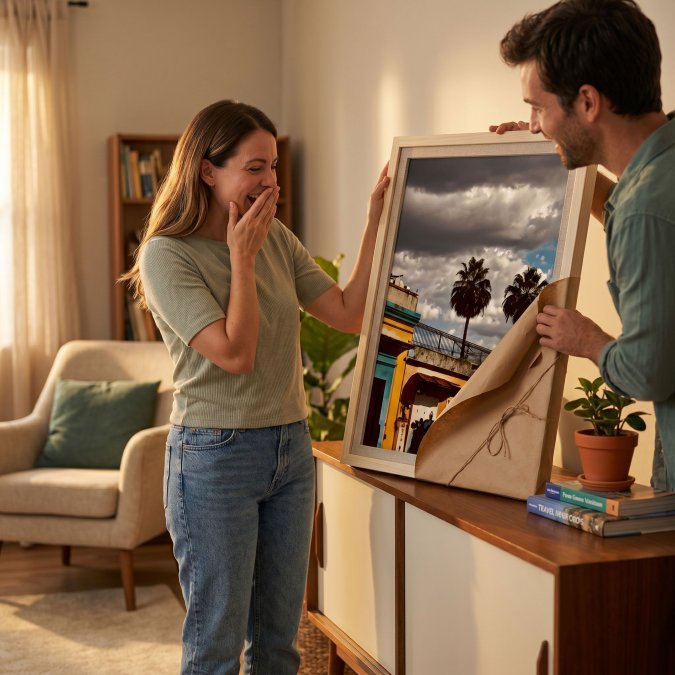
We judged both paths on six things: print materials and longevity, edition structure, framing and mounting, total cost, authenticity and artist compensation, and what actually arrives at your door. A common mistake is comparing only the sticker price. The real difference usually shows up two years later, when one print still looks the way it did on day one and the other has faded behind glass.
Who Each Path Suits
Mass-market retail suits anyone who wants a familiar image fast, at a low entry point, with predictable sizing. Independent photography suits buyers who care where an image came from, who shot it, and whether anyone besides a warehouse profited. Neither is wrong. They answer different questions.
Print Quality and Materials: Archival Paper, Canvas, and Metal
Print quality depends less on the image file and more on the paper, ink, and finishing a seller chooses. Mass retailers often print on standard poster stock with dye-based inks, which keeps costs down but shortens print longevity. Independent photographers tend to use archival paper, pigment inks, canvas, or metal, all of which hold color accuracy far longer under normal indoor light.
The trade-off is real. Archival materials cost more, and they are usually made to order rather than pulled from a warehouse shelf. That production model is also why independent print sizes can be more flexible, and why a print like our Majestic Tree by a European Lake Aluminum Print arrives on rigid DIBOND aluminum rather than flexible paper. Metal gives a print a crisp, modern surface with no glass glare, which matters in bright rooms.

Limited Edition vs Open Edition Art: What You Are Actually Buying
Limited edition means the photographer has capped how many prints of that image will ever exist, usually numbered and often signed. Open edition means the image can be reprinted indefinitely, so supply never runs out. Mass-market retailers almost always sell open edition, because reprinting is their entire business model.
Independent photographers split between the two. Some release open edition prints to keep prices accessible, while others cap runs to protect the value of early purchases. Neither approach is automatically better. What matters is that the seller tells you clearly which one you are buying, because it changes both the price and the long-term resale picture.
Framing, Mounting, and Ready-to-Hang Convenience
Framing is where most online art purchases go wrong. A print that arrives rolled in a tube means a trip to a framer, a wait, and often a bill that exceeds the print itself. Ready-to-hang options remove that entire step, and they are one of the clearest practical differences between the two paths.
Mass retailers increasingly offer framed options, but frame quality varies widely, from thin composite mouldings to basic clip frames. Independent sellers often lean toward solid wood or metal frames with proper mounting behind the print. Our Cotswolds English Countryside Framed Poster arrives mounted in an ash wood frame, ready to hang the moment it leaves the box. Custom framing still wins when you have an unusual wall dimension, but for standard sizes, ready-to-hang saves both money and weeks of waiting.

| Decision Point | Mass-Market Retail | Independent Photography |
|---|---|---|
| Typical materials | Poster stock, dye inks | Archival paper, pigment inks, canvas, metal |
| Edition type | Open edition | Limited or open, stated clearly |
| Framing | Basic, varies widely | Wood or metal, often ready to hang |
| Production | Warehouse stock | Made to order |
| Authenticity | Rarely documented | Often stated with provenance |
| Artist share | Minimal to none | Direct to photographer |
Price, Value, and Investment Potential Compared
Price is the easiest thing to compare and the least useful. A mass-market poster costs less up front, and that is genuinely the right call for a dorm room or a rental you will leave in a year. Independent prints cost more because archival materials, made-to-order production, and the photographer's own work all sit inside that number. The mistake is stopping the comparison there.
A better framework is cost per year on the wall. Take the sticker price and divide it by how long the piece actually stays up and looks good.
| What You Are Really Comparing | Mass-Market Retail | Independent Photography |
|---|---|---|
| Up-front cost | Lowest entry point | Higher, reflects materials and labor |
| Cost per year on the wall | Rises as the print fades or is replaced | Falls the longer it hangs |
| Edition structure | Open edition, reprinted indefinitely | Limited or open, stated clearly |
| Who gets paid | Warehouse, licensing, retail margin | Photographer directly, plus print lab |
| Resale picture | Essentially none | Modest, but real for signed, numbered runs |
| Replacement risk | High in bright rooms | Low under normal indoor light |
If you want to see how this plays out in practice, our Majestic Tree by a European Lake Aluminum Print is made to order on rigid DIBOND aluminum, which is exactly the kind of piece that rewards the cost-per-year math rather than the up-front number.
Authenticity, Sustainability, and Artist Compensation
A quick three-question test works for any listing:
- Who photographed this, and where?
- Is this a limited or open edition, and what is the edition size?
- Does it come with a signature, number, or certificate?
How to Style Photography Prints in Real Rooms
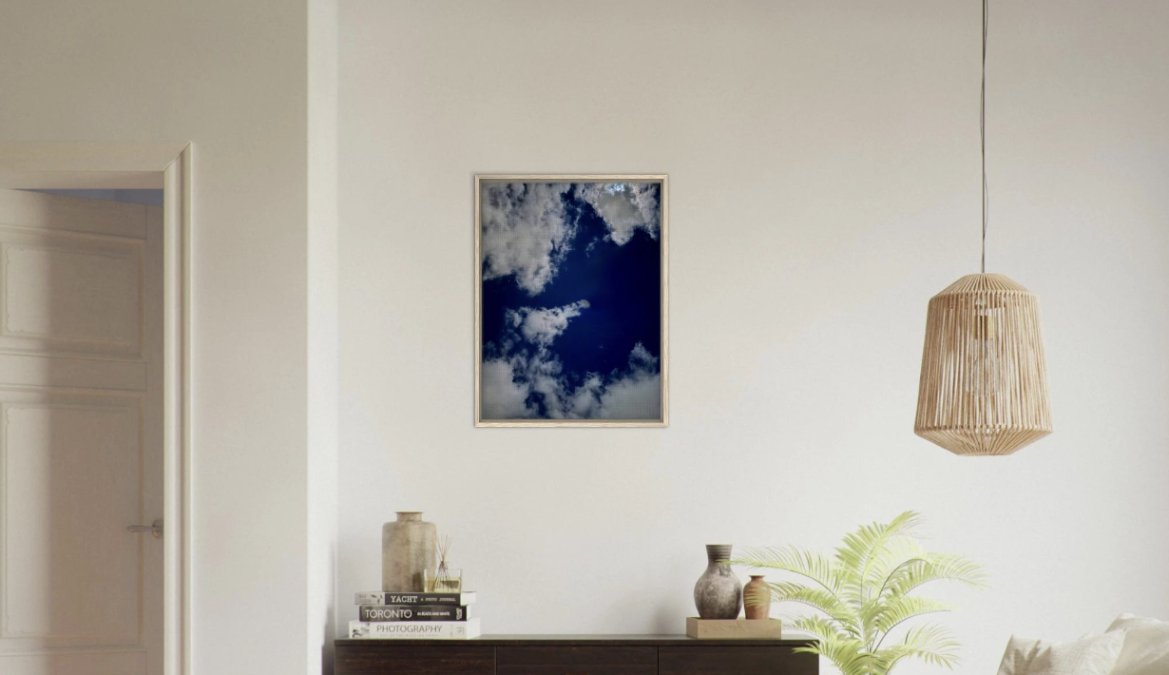
Styling is where a good print either earns its wall or disappears into it. Start with scale: a single large piece above a sofa usually reads better than four small frames fighting for attention. Then match the print's mood to the room's light. A soft coastal image works in a bright, airy space, while a high-contrast black and white print holds its own in a darker, moodier room.
Shipping, Delivery, and What Arrives at Your Door
Shipping logistics decide how the purchase actually feels. Mass retailers usually ship from a warehouse within days, which is a genuine advantage when you need something fast. Independent photographers often produce to order, so expect a slightly longer window and packaging designed to protect a framed or rigid piece in transit.
Frequently Asked Questions
What are the benefits of buying fine art photography prints from independent artists?
Independent artists shoot, edit, and release their own work, so every print traces back to a real place and a real moment. You often get direct communication with the maker, honest detail about paper and ink, and runs small enough that your piece stays uncommon. Independent sellers also tend to explain their sourcing and give-back commitments openly, which is harder to verify with mass-produced wall decor.
How does print quality differ between large retailers and independent photographers?
Large retailers usually print at volume, which can mean thinner paper, wider color drift between batches, and fading within a few years in direct sun. Independent photographers typically choose archival paper or canvas, giclee printing, and pigment inks rated for decades of display. Ask which paper, which ink, and whether the file is high-resolution photography. Those three answers tell you more than any product photo.
What is the difference between open edition and limited edition photography prints?
An open edition can be reprinted indefinitely, so the image stays available and the price stays stable. A limited edition is capped at a set number of prints, each numbered and often signed, and nothing more is produced once the run sells out. Limited editions suit collectors who care about scarcity. Open editions suit anyone who wants a specific size or frame without rushing a decision.
How can I tell whether a print is authentic and not a reproduction?
Look for a certificate of authenticity, a signature or numbered mark, and a clear statement that the image is original work rather than licensed stock. Check that the seller names the photographer and the location. If the listing shows the same image across dozens of unrelated shops, it is likely a reproduction. Independent sellers like CaliCuration publish only founder-shot photography, so the origin is traceable.
How do I style photography prints so they work in a room?
Start with scale. A single large print over a sofa or bed reads calmer than a scattered grid of small frames. Match the frame to your existing hardware, warm wood tones with brass, black or ash with matte metals. Leave 5 to 8 centimeters of wall between frames in a gallery wall, and hang the center of the piece at eye level, roughly 145 to 150 centimeters from the floor.
The hardest part of buying art online is not finding an image you like. It is knowing whether the thing on your wall will still look right in five years. We built CaliCuration around original, founder-shot travel photography, produced on demand with eco-friendly materials and packaging, and framed so it is ready to hang the day it arrives. If you want a piece with a real place and a real moment behind it, browse the collection and find the one that belongs on your wall.